TOPSUN Capital (Group) 2026 Plan: Scientific Financial Industrialization and Global Free Trade Zone

TOPSUN Capital (Group) 2026 Plan: Scientific Financial Industrialization and Global Free Trade Zone AI Era Reconstruction Path and Migration Direction Model
TOPSUN Capital (Group) 2026 Plan:
Scientific Financial Industrialization and Global Free Trade Zone AI Era Reconstruction Path and Migration Direction ModelBased on the cooperation foundation from the 2017 led inspection of the China-Malaysia Qinzhou Industrial Park under the framework of the ACFC/CCC Global Presidential Friends Club, this model reviews the complete path from technology reserves to financial industrialization transformation. The 2017 inspection focused on introducing cutting-edge technologies (such as AI smart cameras, drones, big data, VR/smart driving), laying the cornerstone for China-Malaysia industrial cooperation. Subsequently, due to challenges in industrial fund adaptability (matching difficulties between Chinese local government policies and overseas investment funds), some technology reserve projects were shelved, shifting toward more implementable green agriculture and global resource migration. At the same time, TOPSUN Capital (Group), under ACFC, has built compliant financial bridging through gold mine resource entrusted management and overseas fund authorization, responding to the urgent needs of current local governments and relevant countries for financial, technological, and industrial resources, and achieving AI-era global free trade zone reconstruction.The model emphasizes:
“Global Free Trade Zone Reconstruction”: Optimizing resource flows, green development, and cross-border reflux through the “enclave free trade zone” model.
“Migration Direction”: From northern resource-rich areas southward to emerging southern markets, ultimately forming a global circular closed loop.
Core Principles
AI Era Empowerment: Apply AI to financial risk control, technology applications (e.g., intelligent security), resource management (e.g., green agriculture big data), and trade optimization, ensuring efficiency, low carbon, and intelligence.
Financial Compliance Bridging: TOPSUN Capital (Group) collaborates with METHEUS AMC through gold mine resource entrusted management to establish overseas industrial funds, and has signed an authorization agreement with the AAG Group under Rothschild UK, enabling direct investment forms to quickly respond to local government needs.Green Sustainable Development: Resource migration focuses on original ecological protection and rural revitalization (e.g., full star anise industry chain), embodying the “Human Future – Earth and Clean Water” industry IP.
Multilateral Cooperation Foundation: Originating from the 2017 China-Malaysia Industrial Park inspection, extended to the Korea Roh Moo-hyun Foundation (knowhow.or.kr), deepening Korea-China cooperation in green industries, social innovation, and people’s livelihood welfare.
Government Demand Response: Targeting current financial, technological, and industrial resource gaps in Guangxi, Guangdong, Hainan, Zhejiang, Northeast China, etc., providing rapid implementation paths to support smart parks, port logistics, and green agriculture upgrades.
| Stage | Key Nodes/Regions | Migration Direction and Resource Flow | Scientific Financial Industrialization Mechanism | AI Era Reconstruction Focus | Collaborative Implementation Project Examples |
|---|---|---|---|---|---|
| Starting Point: Resource Enrichment and Initial Reserves (2017-2020) | Russian Far East Baikal Lake Region; Mongolia Free Trade Zone | Starting point for southward migration of Earth resources (minerals, energy), building northern resource export channels. | Gold mine resource entrusted management (TOPSUN with METHEUS AMC), initial fund authorization (UK AAG). | AI resource exploration and green mining optimization (e.g., big data analysis). | 2017 China-Malaysia Industrial Park inspection technology reserves (e.g., US Magic Eye AI camera for resource area security); Korea Foundation cooperation introducing citizen-participation green development models. |
| Transition: Northeast Asia Injection and Digital Bridging (2021-2023) | China Northeast; Zhejiang Hangzhou/Ningbo | Resources move south to industrialized nodes, connecting land-sea trade networks. | Overseas fund direct investment injection, policy adaptation to resolve fund delays. | AI-driven intelligent transportation/logistics (e.g., VR/drone experiences), digital park upgrades. | Qinzhou Industrial Park smart pilot (continuing 2017 inspection consensus); After Lin Haibo’s transfer to Guigang, support for ACFC member enterprises (e.g., Guangxi Golden Star Anise Innovation Investment Co., Ltd.), AI-optimized star anise supply chain. |
| Core: Southern Emerging Market Expansion (2024-2026) | Guangxi Guangdong; Hainan Free Trade Zone; ASEAN Countries | Accelerated southward migration, radiating Southeast Asia trade circle, green agriculture and port synergy. | TOPSUN Capital global enclave free trade zone framework implementation, absorbing high-quality projects (e.g., agricultural technology). | AI-era industry reflux mechanisms (e.g., edge computing supporting cross-border e-commerce, cultural anime). | Guangxi Huikuntang Food Production Co., Ltd. promoting star anise to the world (geographical indication product industrialization); Hainan Free Trade Zone AI port logistics optimization, extending China-Malaysia park cooperation foundation to ASEAN green trade. |
| Closed Loop: Global Reflux and Reconstruction (2026+) | Reflux to the United States; Reconstruction of Gaza and other hotspot areas | North-south resource circulation, forming a global closed loop, supporting reconstruction and sustainable development in conflict zones. | Full-chain fund authorization and direct investment, building AI-era investment development network. | AI applications in reconstruction (e.g., smart infrastructure, environmental monitoring), green development global family. | Deepened cooperation with Korea Foundation, promoting China-US-Korea multilateral projects (e.g., Gaza green reconstruction fund); ACFC “New Century Plan” activates shelved reserves, shifting to global free trade zone AI platform. |
Key Collaborative Projects and Implementation SuggestionsFinancial Industrialization Implementation:
Leverage TOPSUN Capital (Group) overseas funds to prioritize direct investment in nodes such as Guigang Guangxi and Hainan Free Trade Zone (e.g., full star anise industry chain AI upgrade), expected to cover multiple port cities in 2026. It is recommended to establish joint coordination mechanisms with local governments to accelerate policy adaptation.
Leverage TOPSUN Capital (Group) overseas funds to prioritize direct investment in nodes such as Guigang Guangxi and Hainan Free Trade Zone (e.g., full star anise industry chain AI upgrade), expected to cover multiple port cities in 2026. It is recommended to establish joint coordination mechanisms with local governments to accelerate policy adaptation.
Technology Resource Injection:
Activate 2017 inspection reserves (e.g., big data/cross-border e-commerce), combine US Magic Eye AI camera for free trade zone security; Korea Foundation cooperation introduces education and training to enhance citizen participation in AI innovation.
Activate 2017 inspection reserves (e.g., big data/cross-border e-commerce), combine US Magic Eye AI camera for free trade zone security; Korea Foundation cooperation introduces education and training to enhance citizen participation in AI innovation.
Risks and Opportunities:
Risks include geopolitical fluctuations; opportunities lie in AI-era resource reconstruction (e.g., Baikal Lake green energy southward migration). ACFC provides global network support to ensure sustainability.
Risks include geopolitical fluctuations; opportunities lie in AI-era resource reconstruction (e.g., Baikal Lake green energy southward migration). ACFC provides global network support to ensure sustainability.
Outlook:
This model takes the 2017 China-Malaysia Industrial Park visit as its starting point, achieving a leap from technology reserves to financial-green industrialization, assisting international cooperation nodes and AI-era global win-win.
This model takes the 2017 China-Malaysia Industrial Park visit as its starting point, achieving a leap from technology reserves to financial-green industrialization, assisting international cooperation nodes and AI-era global win-win.Welcome members and partners of the ACFC/CCC Global Presidential Friends Club to participate and jointly build bridges of friendship!
TOPSUN Capital (Group) 2026 Plan Review
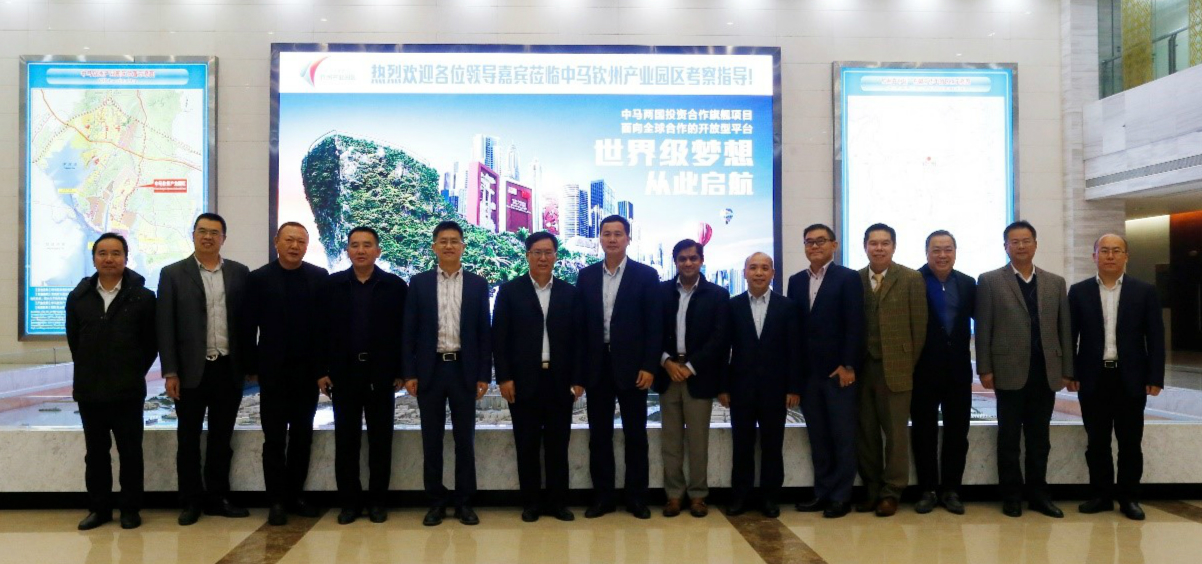
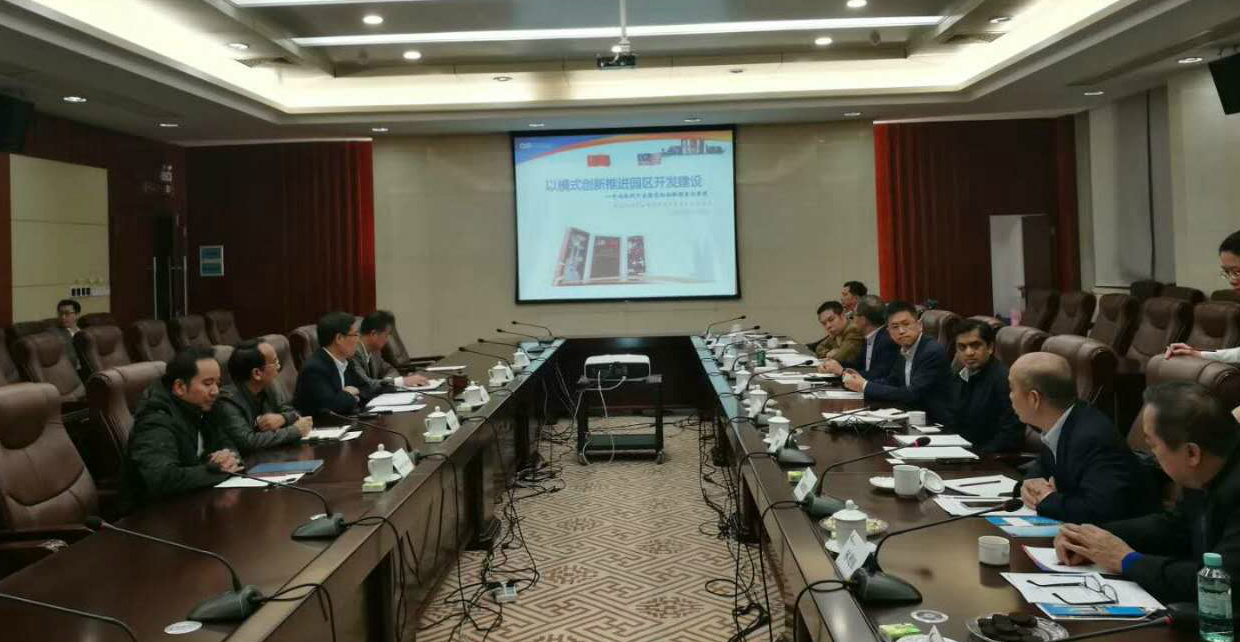
On December 13, 2017, led by the America-China Friendship Promotion Association in collaboration with Asia-Pacific Daily, Shenzhen “Belt and Road” Economic and Trade Strategy Research Institute, Singapore Eastport Group, and the South China Branch of the Ministry of Industry and Information Technology’s CCID Industrial Research Institute, an inspection team visited the China-Malaysia Qinzhou Industrial Park in Qinzhou. Accompanied by leaders including Gao Pu, Executive Deputy Director (departmental level) of the Park Management Committee, Deputy Secretary of the Working Committee, and Member of the Qinzhou Municipal Party Committee Standing Committee, the delegation carefully listened to the park’s planning and development situation. During the discussions, both sides fully communicated on leveraging respective resource advantages and actively promoting cooperative development, conducting positive explorations on cooperation in ports, industries, capital, talent, urban openness, and other fields, expressing joint advancement of a series of cutting-edge technology projects.The China-Malaysia Qinzhou Industrial Park, as a government cooperation project between China and Malaysia and an important pioneering exploration and practice of the national Belt and Road Initiative, holds enormous potential for investment cooperation. It is reported that the overall planned area of the China-Malaysia Qinzhou Industrial Park is 55 square kilometers. In April 2011, the prime ministers of China and Malaysia reached a consensus, with Premier Wen Jiabao proposing that “the Guangxi Qinzhou China-Malaysia Industrial Park is the first industrial park for bilateral cooperation in western China and has demonstrative significance.” It is planned to be built as a high-tech, low-carbon, internationalized industrial park, becoming a landmark project of China-Malaysia economic and trade cooperation and a new model for China-ASEAN Free Trade Area cooperation.The Park Management Committee welcomes the inspection team to participate in park internet creative education space project cooperation, Qinzhou Port planning research, and China-ASEAN port city cooperation network construction, further strengthening innovative research and planning in key industries of the park, and actively promoting and introducing projects such as drone confrontation, VR experiences, smart driving experiences, big data, cross-border e-commerce, cultural anime industries, talent training, etc.Attendees included Lin Haibo, Deputy Director of the China-Malaysia Qinzhou Industrial Park Management Committee; Huang Wenxing, President of Singapore Eastport Group, and Director Lin Jianqiang; Jin Changsheng, Vice President of Shenzhen Hengfu Group; Li Zhizhong, Vice President of Shenzhen Xinhe Group; Wang Sanyi, Dean of the South China Branch of CCID Industrial Research Institute under the Ministry of Industry and Information Technology; Liu Zhendong, Executive Deputy Secretary-General of Shenzhen “Belt and Road” Economic and Trade Strategy Research Institute; Jin Wensheng, President of Asia-Pacific Daily, and Vice President Liu Jian; Lin Yaoxian, President of the America-China Friendship Promotion Association; Manoj Jain, Chairman of International China Investment Private Limited and Director of the Investment and Economic Cooperation Committee of the America-China Friendship Promotion Association; Huang Hansen, Senior Advisor to the China Private Economy International Cooperation Chamber of Commerce and Deputy Director of the Investment and Economic Cooperation Committee of the America-China Friendship Promotion Association; as well as responsible persons from the Park Management Committee Office, Economic Development Bureau, Finance Bureau, and Investment Cooperation Bureau.
